A raised bed is supposed to make vegetable gardening easier, so it is frustrating when the soil stays wet for days after rain and plants look worse instead of better. Raised bed drainage problems often show up first as yellowing lower leaves, slow growth, split tomatoes, or seedlings that simply stop moving forward. The good news is that most drainage issues can be improved without tearing out the whole garden or relying on complicated fixes.
What poor drainage looks like in a raised bed
Wet soil is not automatically a problem. Tomatoes, cucumbers, squash, and leafy greens all need steady moisture, especially during hot weather. Trouble starts when the root zone stays saturated long after watering or rainfall. Roots need tiny pockets of air in the soil as much as they need water. When those air spaces fill with water for too long, roots cannot take up nutrients properly and may begin to rot.
A quick test is to push a finger or trowel 4 to 6 inches into the bed the day after a normal watering. If the soil feels cool and damp, that is usually just right. If it is sticky, shiny, or squeezes into a muddy ball, it is holding too much water. A sour or swampy smell is another clear sign that the soil has been waterlogged for a while.
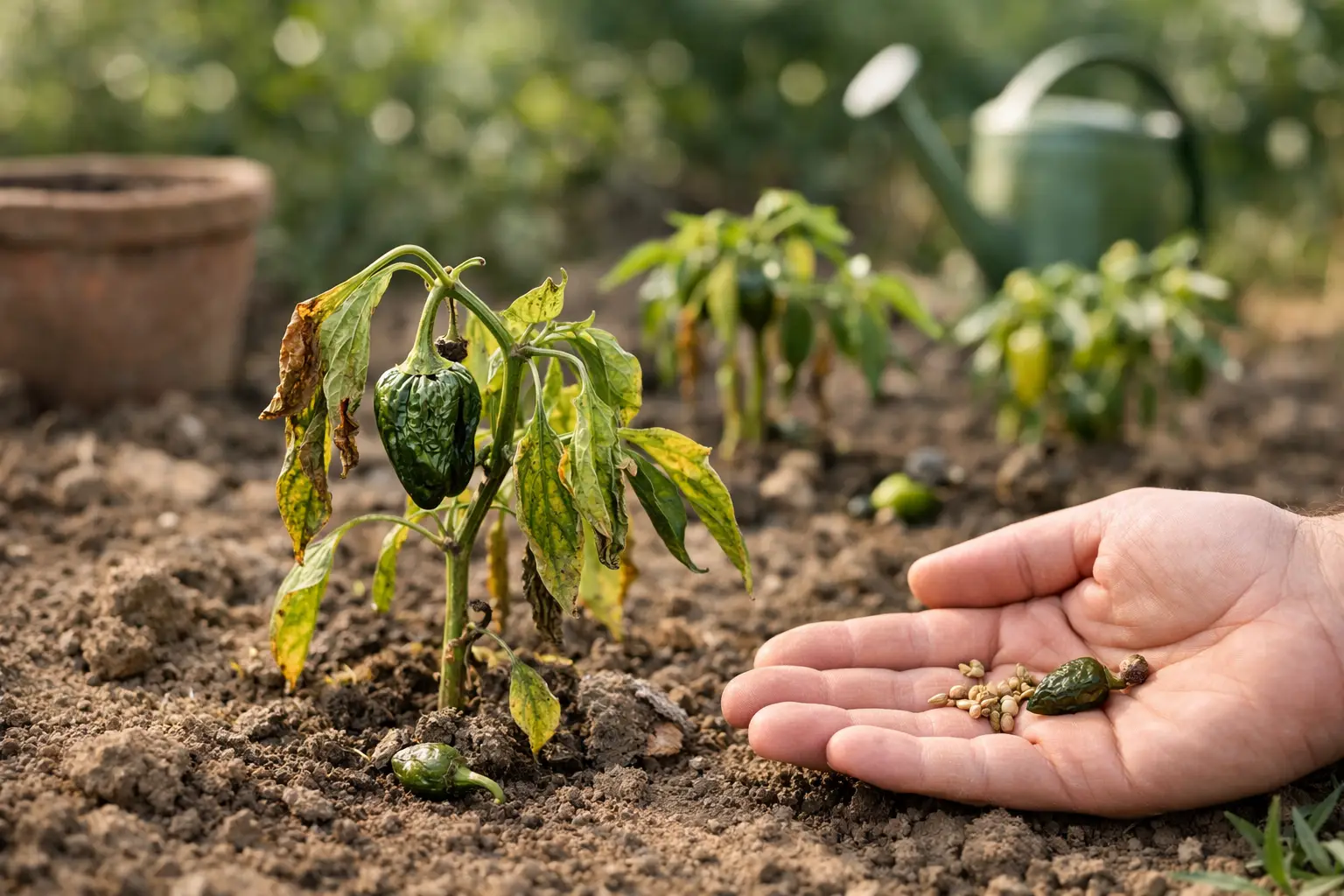
Plants give clues, too. Yellow leaves can look like a fertilizer shortage, but adding more fertilizer to soggy soil usually makes matters worse. Watch for wilting even though the bed is wet, stunted plants, brown root tips, and fungal problems near the soil line.
The most common causes of raised bed drainage problems
Heavy native soil beneath the bed
A bottomless raised bed should drain into the ground below it. If your yard has dense clay soil, the bed can act a little like a bathtub. Water moves easily through the loose bed mix, then hits the compacted clay beneath and slows down dramatically.
This is especially common in areas with clay-heavy soil and in new construction yards, where machinery may have compressed the ground. A bed only 6 or 8 inches tall can still struggle if there is nowhere for excess water to go.
Before filling a new bed, loosen the native soil below with a garden fork. You do not need to turn it upside down or destroy every soil layer. Simply push the fork in, rock it back and forth, and repeat across the bed. This creates pathways for water and roots while protecting the soil structure and the living organisms already there.
Soil mix with too much fine material
Garden soil, topsoil, and compost all sound like sensible ingredients, but a bed filled mostly with any one of them can become dense. Fine particles pack together over time, especially after repeated watering. Compost is wonderful for fertility and moisture balance, yet too much compost can hold more water than crops need and settle noticeably through the season.
For most vegetables, aim for a fluffy, crumbly mix that holds moisture but still falls apart in your hand. If the bed feels heavy and slick when wet, work in a coarse, natural material such as pine bark fines, aged wood chips that have mostly broken down, or leaf mold with a fibrous texture. These improve structure rather than simply adding more nutrients.
Avoid trying to fix this with a thin layer of sand. Adding small amounts of sand to clay-like soil can create an even harder, concrete-like texture. Sand only improves drainage when used in a large, properly balanced mix, which is rarely practical once a raised bed is planted.
Compaction from leaning and stepping
One easy-to-miss cause is foot traffic. Soil in the center of a wide bed may look loose on top but become compressed underneath after someone leans into it, reaches across it regularly, or steps in while harvesting. Water then pools in the compressed layer.
Keep beds narrow enough to reach from either side, usually no more than 4 feet wide. If you need to work in a larger bed, lay a temporary board across the top to spread your weight instead of stepping directly on the soil. It is a small habit that protects drainage and makes root growth easier.
Too much water from irrigation
A bed can drain reasonably well and still stay soggy if it is watered too often. Drip irrigation is efficient, but it is not automatically foolproof. A timer set for a daily routine may be perfect during a heat wave and excessive during a cool, cloudy stretch.
Check the soil before turning on the water rather than following a fixed schedule. Established vegetables generally benefit from deep, less frequent watering because it encourages roots to grow downward. Frequent shallow watering keeps the upper layer constantly wet and can make plants more dependent on daily attention.
Rain counts, too. If your bed is near a downspout, at the bottom of a slope, or beneath a roof edge, it may receive far more water than the rest of the garden. Redirecting runoff is often a simpler fix than changing the soil.
Fix drainage without starting over
If the bed already has plants growing in it, start gently. Stop watering until the top few inches begin to dry, then check the soil deeper down. Pull mulch back temporarily if it is thick and the weather is wet. Mulch is valuable for holding moisture and protecting soil life, but a waterlogged bed needs a chance to breathe.
Next, use a garden fork to loosen compacted areas between plants. Slide the fork straight down and gently lift the soil a little without flipping it over. This is called broadforking or aerating, and it can restore air channels with much less disruption than digging.
For a bed that stays wet every spring, top-dress with a blend of finished compost and coarse organic matter, then let earthworms and weather work it down over time. This is not an overnight solution, but it builds healthier structure season after season. Organic gardening often works best this way: improving the system instead of chasing one quick fix.
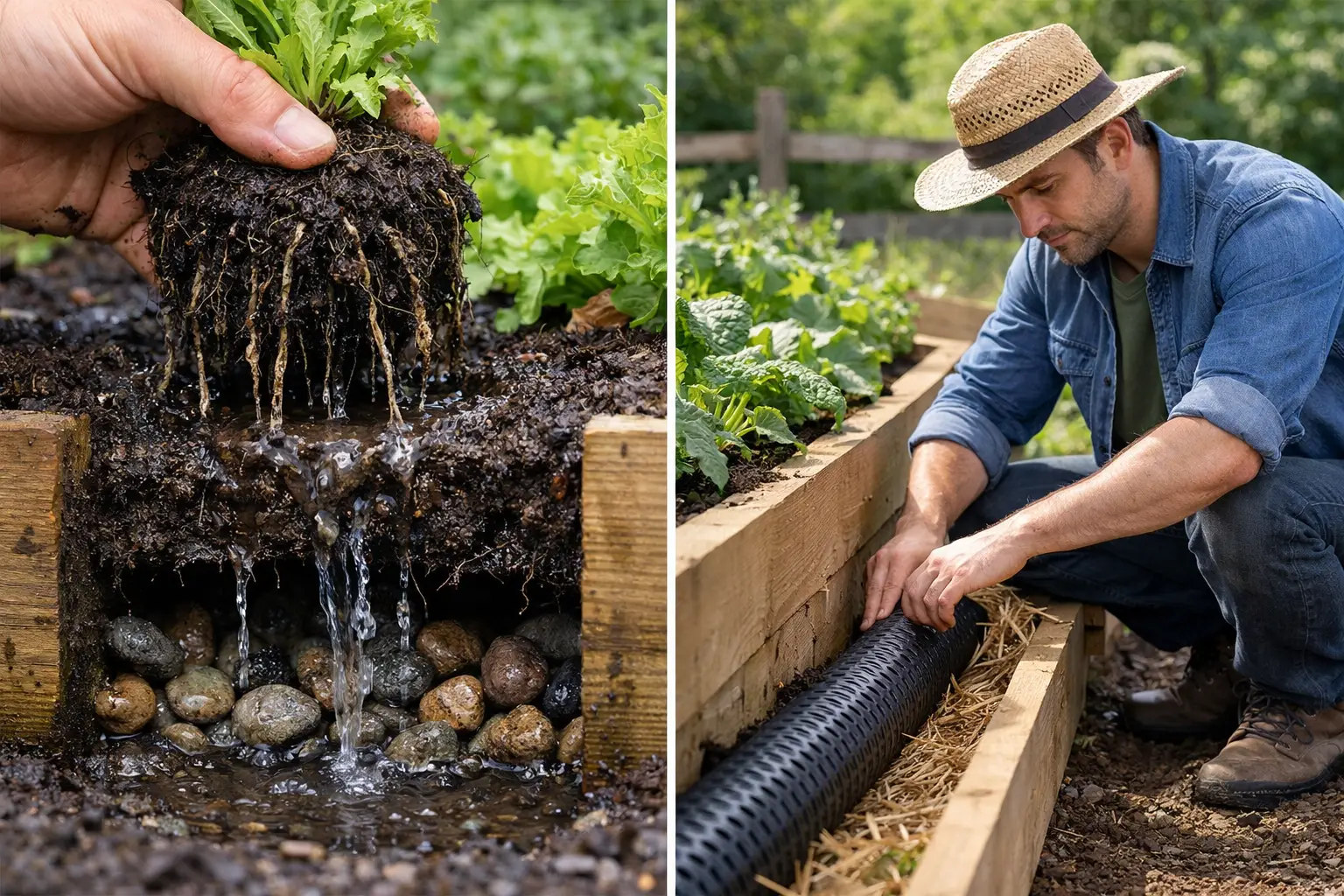
If water is actually standing in the bed after several dry days, investigate the base. Landscape fabric, plastic sheeting, cardboard layered too thickly, or a solid liner can block drainage. Remove non-breathable barriers from the bottom of a ground-level bed. Cardboard is fine as a short-term weed suppressor when building a bed, but it should be wet thoroughly and allowed to break down rather than installed as a permanent wall.
Should you put gravel in the bottom of a raised bed?
Usually, no. Gravel at the bottom of a typical raised bed does not improve drainage the way many gardeners expect. Water tends to slow at the boundary between fine soil and a coarse gravel layer until the soil above is very saturated. That can leave roots sitting in wetter soil, not drier soil.
Gravel can be useful for a raised planter that has a solid bottom and properly drilled drain holes, or for leveling a structure on a stable base. But for an open-bottom vegetable bed, healthy soil structure and a loosened native-soil layer are much more useful than a layer of rocks.
The same goes for filling the lower half of a bed with logs, branches, or large woody debris. This can be a reasonable way to use materials in a very tall bed, but it may create uneven settling and temporary nitrogen demand as wood decomposes. It is not a reliable drainage cure. If your main concern is soggy roots, keep the growing zone deep and filled with a balanced soil mix.
Build better drainage into the next bed
When planning a new raised bed, choose the location before choosing the lumber. Avoid the lowest point in the yard and places where puddles already form after rain. A slightly elevated, sunny area with room for air to move around the plants is usually a better starting point.
Use an open-bottom design whenever possible, and loosen the ground beneath before adding soil. For beds on concrete, patios, or decks, use containers or elevated planters designed with several generous drainage holes. Place them on feet or risers so water can escape freely instead of collecting underneath.
A good raised bed mix should feel like a moist chocolate cake crumb, not wet clay and not dry dust. Keep feeding it with compost in modest amounts, protect it with organic mulch, and avoid compacting it. Those simple practices support drainage, soil life, and stronger vegetable roots all at once.
If you are unsure whether a bed needs more water or less, trust the soil more than the calendar. A few minutes spent checking beneath the surface can save a season of struggling plants and help your garden find the steady, healthy rhythm it was meant to have.