A nozzle can look like a tiny garden purchase until you spend ten minutes trying to water seedlings with a harsh spray, fighting a sticky trigger, or getting soaked while rinsing mud from the patio. This garden hose nozzle review focuses on what matters in a real home garden: gentle watering, dependable control, less hand strain, and materials that will not become disposable after one season.
For organic gardeners, the right nozzle is not about having the most spray settings. It is about putting water where plants need it without blasting soil, exposing roots, or scattering disease-prone leaves with unnecessary spray. A simple, well-made nozzle can make daily watering calmer and more precise, especially when tomatoes, containers, raised beds, and young transplants all need slightly different treatment.
What a Garden Hose Nozzle Needs to Do Well
The best nozzle is one you can adjust without stopping to wrestle with it. In practice, that means a soft shower for seedlings and leafy greens, a stronger but controlled spray for established beds, and a solid stream for filling a bucket or washing tools. Anything beyond those basics is helpful only if it works reliably.
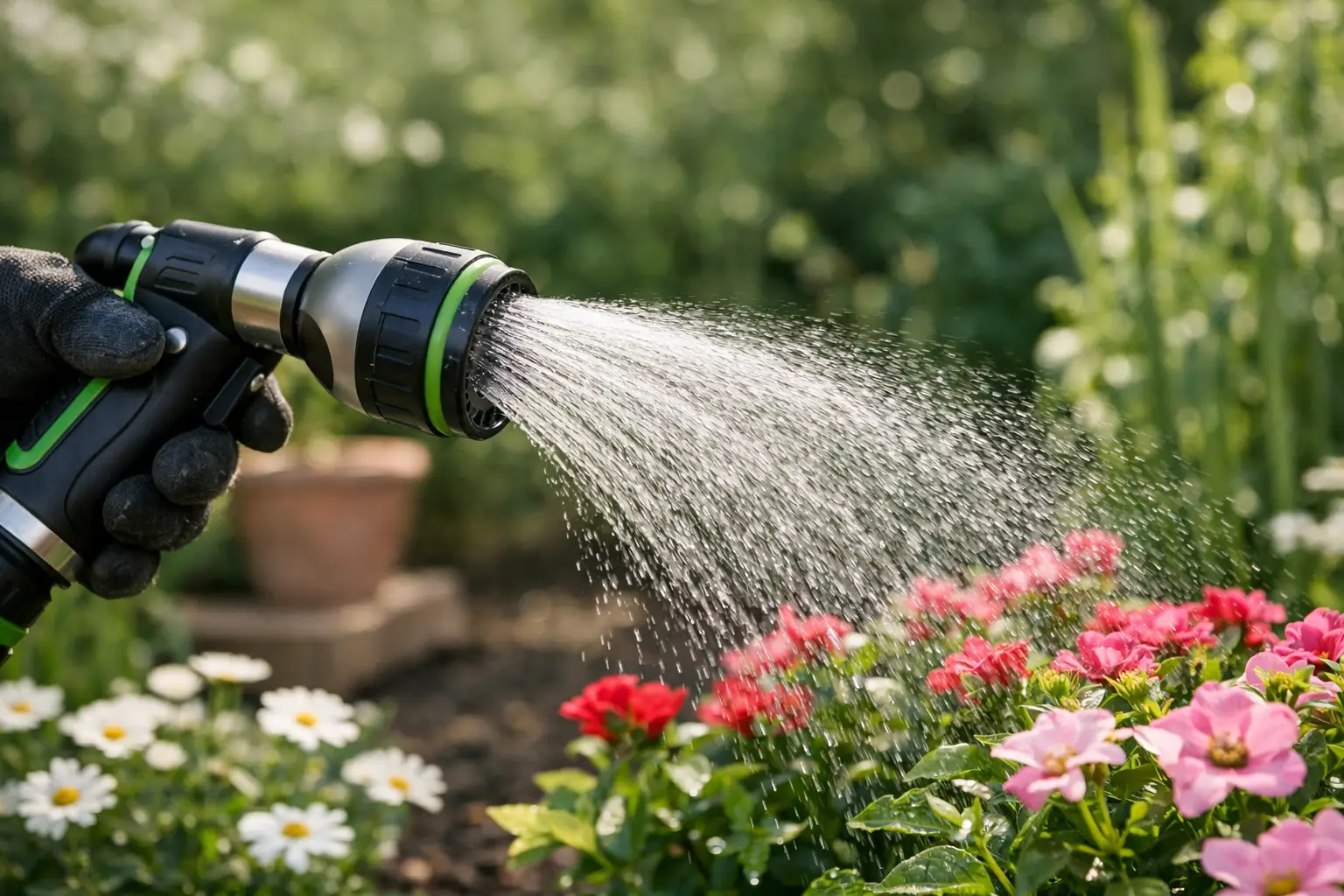
The shower setting earns its place first. It should create an even, rain-like flow rather than a few sharp jets that carve holes into potting mix. This is the setting most gardeners will use for seed trays, herbs, lettuce, new plantings, and containers that dry quickly in summer.
A flat or fan-shaped spray is useful for soaking a broader patch of soil around established plants. A straight stream has a different job: filling watering cans, rinsing garden gloves, cleaning muddy pots, or reaching the base of a shrub from a short distance. It is not the setting for delicate plants, no matter how tempting it is when you are in a hurry.
The adjustment should be easy to turn with damp hands. Some nozzles use a twist barrel, while others use a dial with clearly marked patterns. Both can work well. A twist barrel is often simpler and has fewer moving parts, but a dial makes it easier to return to a favorite setting without guessing.
Garden Hose Nozzle Review: The Types Worth Considering
Rather than one perfect style for every yard, there are a few nozzle designs that suit different gardening routines. The best choice depends on what you grow and how often you water.
Multi-pattern pistol-grip nozzles
This is the familiar style with a trigger handle and a rotating spray dial. It is a practical all-around choice for gardeners with a mix of beds, containers, and cleanup jobs. Look for a trigger that moves smoothly and a lock that holds the flow open when you are watering for more than a minute or two.
The trade-off is that cheaper pistol grips often have plastic trigger pivots and thin internal parts. These are usually the first places to crack, stick, or leak. A metal-bodied version with a comfortable rubberized grip costs more, but it tends to be a better long-term choice when you water regularly.
Fireman-style nozzles
Fireman-style nozzles have a larger twist handle that adjusts water flow from off to full force. They are wonderfully straightforward, especially for gardeners who dislike clicking through eight or ten spray patterns to find a gentle shower.
Their strength is control. You can gradually open the flow for a soft rinse around seedlings, then increase it to wash soil off a shovel. They can feel heavier than a pistol grip, though, and some models do not produce as delicate a shower pattern. If you grow lots of tiny seedlings or use lightweight potting mix, test the gentlest setting before watering closely.
Watering wands
A watering wand is often the kindest option for raised beds, hanging baskets, and containers tucked behind larger plants. The longer reach lets you water at soil level rather than spraying over foliage, which is especially useful for tomatoes, squash, and other plants that are happier when their leaves stay dry.
A good wand has a shutoff valve near the handle and a soft shower head that spreads water evenly. The downside is storage and durability. Long wands can get bent if they are dropped or left where a wheelbarrow can roll over them. They are also less convenient for washing tools or cleaning a patio.
Simple adjustable spray nozzles
These compact metal nozzles twist from a tight stream to a wide spray. They have no fancy dial, no trigger, and very little to break. For gardeners who want a durable backup nozzle or only need basic watering, this style is hard to beat.
Its limitation is precision. The wide setting may be too forceful for seedlings, and you cannot usually lock it open. Still, simplicity has real value. A basic brass adjustable nozzle stored out of freezing weather can last for years.
Materials Matter More Than a Long Feature List
The nozzle body takes a surprising amount of abuse. It gets dropped on concrete, dragged through mulch, left in the sun, and sometimes forgotten outside before a freeze. Metal bodies, particularly brass, zinc alloy, or aluminum, generally hold up better than all-plastic designs.
That does not mean every metal nozzle is automatically better. Check the areas where parts connect. A sturdy metal shell paired with a flimsy plastic trigger can still fail early. Also look at the hose connection. A swivel connector is a useful feature because it helps prevent the hose from twisting while you work.
Rubber bumpers are another quiet advantage. They protect the nozzle when it hits a stone path or deck, and they make cold metal easier to hold. For gardeners with arthritis or hand fatigue, a large handle and low-resistance trigger matter far more than an extra mist setting.
Avoid buying based on the number of spray patterns alone. Twelve weak or poorly defined patterns are less useful than three excellent ones. The same goes for a very low price. A nozzle that leaks after one summer creates waste, costs more over time, and adds another broken item to the trash.
How We Would Test a Nozzle in a Home Garden
A useful review should go beyond spraying water into the driveway. The first test is the seedling test: can the nozzle water a tray of basil or young lettuce without flattening stems or washing potting mix out of the cells? A true gentle shower should fall evenly, with no hard center jet.
Next comes control at the soil line. Watering around a tomato plant, pepper, or cucumber should be easy without soaking the leaves. This is where a wand shines, but a well-designed handheld nozzle can work if its spray pattern is broad and manageable.
Then there is the everyday comfort test. Does the trigger become tiring after watering several containers? Does the dial slip when wet? Can you shut off the water cleanly before walking across the yard? Small annoyances become big ones when temperatures rise and watering becomes a daily task.
Finally, inspect it after a few weeks. Look for leaks at the connector, a trigger that starts sticking, or a spray dial that becomes difficult to rotate. A nozzle does not need to look brand-new after use, but it should still operate smoothly and hold its settings.
Choosing the Right Nozzle for Your Garden
If your garden is mostly raised beds and vegetable containers, choose a watering wand or a multi-pattern nozzle with a genuinely soft shower setting. The ability to water the soil directly will help conserve water and keep foliage drier.
If you have a larger yard and use the hose for gardening, cleanup, and filling buckets, a quality pistol-grip nozzle is usually the most flexible option. Pick one with a metal body, a comfortable grip, and a trigger lock that is easy to release.
If you prefer tools that stay simple and last, an adjustable brass-style nozzle is a sensible choice. It will not pamper seedlings quite as well, but it handles basic watering and cleanup with very little fuss. Some gardeners keep one as a backup even when they use a wand most days.
Whichever style you choose, protect it from freezing temperatures. Drain the nozzle before cold weather, store it under cover, and replace worn washers rather than tightening connections until they crack. A small rubber washer can often solve a drip that looks like a failing nozzle.
The best garden tool is usually the one that makes a good habit easier to keep. Choose a nozzle that feels comfortable in your hand, gives your plants a gentle drink, and makes you more likely to step outside for those quiet, useful minutes in the garden.