A lot of gardeners learn this the hard way: your patio looks bright, your balcony feels warm, and your vegetables still sulk. That is usually a light issue, not a gardening failure. If you are working with four to six hours of sun, or bright indirect light for part of the day, shade tolerant container vegetables can still give you a worthwhile harvest. You just need to grow the crops that match the space instead of forcing full-sun plants to struggle.
That shift saves a lot of frustration. It also opens up more growing space than people think. A porch, apartment balcony, side yard, or courtyard may never be a tomato powerhouse, but it can be a very good place to grow greens, roots, and a few compact edible plants that actually prefer a little protection from harsh afternoon heat.
What shade really means for container vegetables
In vegetable gardening, shade does not mean deep darkness. Most edible plants still need some light to produce usable growth. For containers, partial shade usually means about three to six hours of direct sun, often in the morning, or bright filtered light through much of the day.
That difference matters because containers dry out faster and heat up faster than in-ground beds. In hot summer climates, a little shade can actually help certain vegetables stay tender longer. Lettuce that bolts in blazing sun may hold on better with morning light and afternoon shade. Spinach and arugula often follow the same pattern.
The trade-off is simple: less light usually means slower growth and smaller yields. So the goal is not to expect giant harvests from fruiting crops. The goal is to choose leafy and compact vegetables that can still produce steadily in modest light.
The best shade tolerant container vegetables
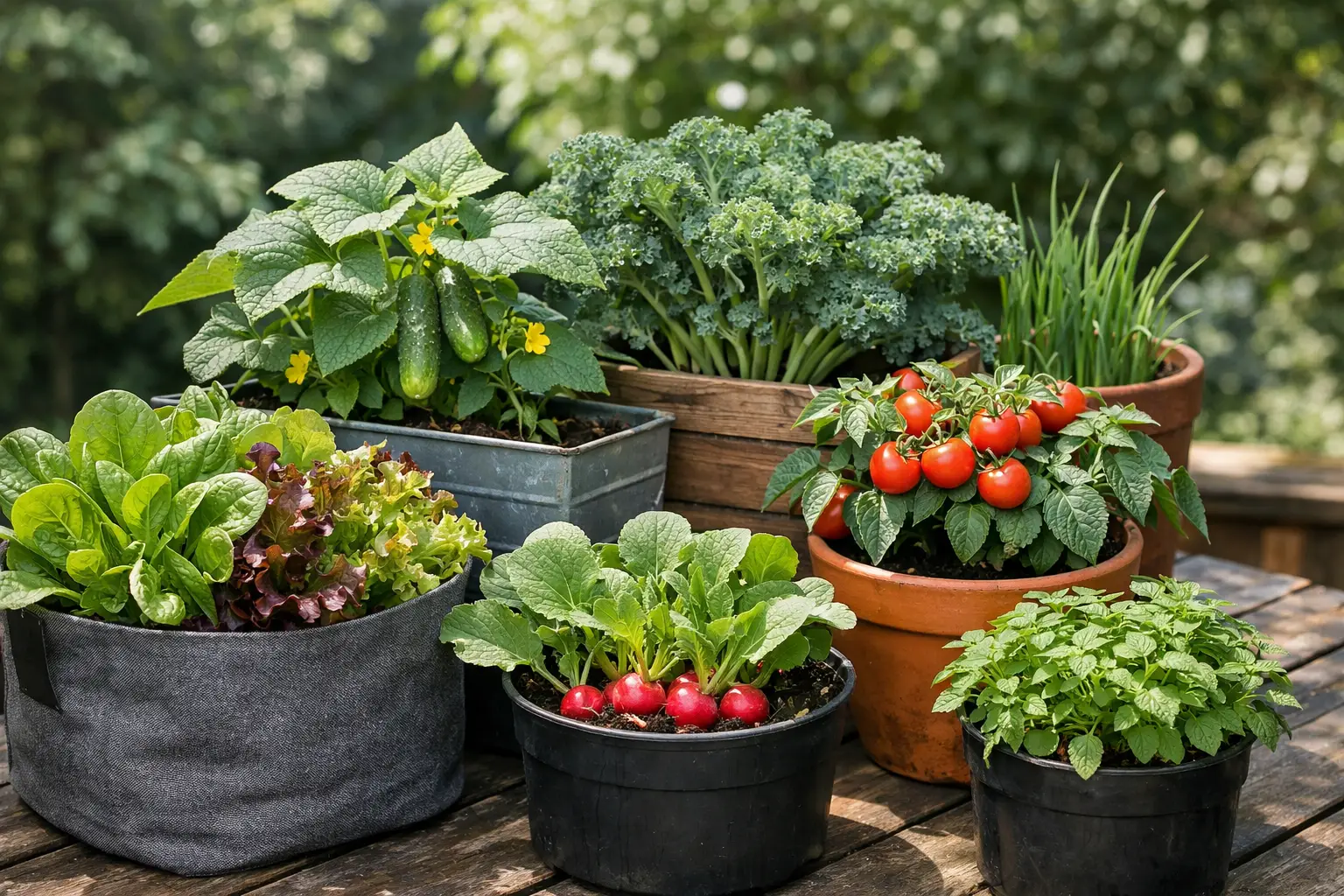
If your space gets limited sun, start with vegetables grown for leaves, stems, or small roots rather than fruits. These tend to be the most reliable.
1. Lettuce
Lettuce is one of the most forgiving choices for partial shade. Loose-leaf types are especially useful in containers because you can harvest outer leaves and let the center keep growing. In hotter regions, shade can improve quality by slowing bolting and keeping leaves milder.
Use a wide container at least 6 to 8 inches deep. Keep the soil evenly moist, and harvest often. If you let lettuce get stressed and dry, it turns bitter fast.
2. Spinach
Spinach appreciates cool conditions, so it often performs better in spring and fall than in midsummer. Still, in a shaded container spot, it can last longer than it would in strong full sun. The leaves may grow more slowly, but they are usually tender and usable.
Choose a pot at least 6 inches deep, feed lightly with an organic fertilizer, and do not let the soil swing from soggy to bone dry.
3. Arugula
Arugula grows quickly, which makes it satisfying for beginners. It handles partial shade well and often tastes better there, especially when temperatures rise. In full summer sun, it can go from lush to bolting in what feels like a weekend.
If you succession sow every couple of weeks, you can keep a container going for a surprisingly long stretch.
4. Kale
Kale is tougher than many people expect. It will not grow as fast in lower light as it does in full sun, but it is still one of the better leafy crops for a shaded container garden. Baby leaves are especially productive.
Use a container at least 10 to 12 inches deep for full-sized plants. Regular picking helps keep it producing.
5. Swiss chard
Swiss chard is one of my favorite problem-solvers for tricky spaces. It tolerates partial shade, handles heat better than spinach, and gives you a long harvest window. Even if growth is slower, you usually get enough leaves to make it worth the pot space.
Because it forms a larger plant, give it a roomy container and good compost-rich potting mix.
6. Mustard greens
Mustard greens grow quickly and adapt well to containers. They tolerate some shade and can be harvested young for milder flavor or left longer if you like more bite. They are a good choice when you want something easy and productive without needing perfect conditions.
7. Radishes
Radishes are not usually the first crop people think of for shade, but they can do fairly well in containers with partial sun, especially in cool weather. The roots may develop more slowly and may not be as large as in sunnier spots, but they are often still crisp and worth growing.
Round varieties tend to be easier than long ones when space and light are limited.
8. Green onions
Green onions are one of the simplest edible container crops for lower-light areas. They do not need a deep pot, and they are useful in the kitchen almost daily. You can sow them closely and harvest as needed.
They are also a nice bridge crop if you are still figuring out how much sun your space actually gets.
9. Beets for greens and small roots
Beets can work in partial shade, though expectations matter. If you want large roots, they may disappoint in low light. If you are happy with beet greens and some smaller roots, they are a good option.
That is a common pattern with shade gardening. Sometimes the crop is still worth growing, just for a slightly different reason than you first planned.
10. Asian greens
Bok choy, tatsoi, and mizuna are excellent shade tolerant container vegetables. They grow quickly, many stay compact, and they are often less fussy than heading vegetables. In warm weather, partial shade can help slow bolting.
If pests are active in your area, keep an eye out for flea beetles and cabbage worms, and deal with them early using simple organic methods.
What usually does not do well
Tomatoes, peppers, eggplant, cucumbers, squash, and beans generally want more sun than a shaded patio can provide. You might keep the plants alive, but you probably will not get the kind of production that makes the container worth watering all season.
There are exceptions with very bright balconies or reflected light, but for most gardeners, these are frustrating choices in shade. It is better to put that same effort into greens that are much more likely to reward you.
How to set containers up for better results
When light is limited, every other growing condition matters more. Start with a quality organic potting mix rather than garden soil. You want something that drains well but still holds moisture. Mixing in compost helps support steady growth without pushing plants too hard.
Container size matters too. Small pots dry out quickly and make plants more vulnerable to stress, especially in summer. Even for compact vegetables, a slightly larger container usually leads to steadier moisture and better harvests.
Watering needs a balanced approach. Shade containers dry more slowly than full-sun pots, so overwatering is a real risk. Check the soil with your finger before watering. If the top inch is dry, water deeply. If it is still damp, wait.
Feeding should stay gentle and consistent. Leafy crops do well with a mild organic liquid fertilizer or a slow-release organic option worked into the potting mix. Too much fertilizer can lead to weak, overly soft growth, especially when light is limited.
Small tricks that make a big difference
A shaded space is rarely evenly shaded. Watch where the sun lands in the morning and where it disappears first in the afternoon. Even an extra hour of direct light can noticeably improve growth.
Use light-colored containers if your climate is hot, since dark pots heat up quickly. Rotate containers every week or so if one side gets more light than the other. Thin seedlings more generously than you think you need to. In lower light, crowded plants compete fast.
It also helps to harvest often. Frequent cutting encourages new leaves and keeps plants from stalling out. For crops like lettuce, kale, chard, and mustard, a little-and-often harvest style usually works better than waiting for one big pick.
A realistic way to plan your shaded edible garden
The easiest way to succeed is to grow what your space supports, then cook from that. If your patio grows salad greens, green onions, and bok choy beautifully, that is not a compromise. That is a productive garden matched to real conditions.
You can also plant by season. Cooler months open the door to spinach, lettuce, arugula, and radishes. Warmer months may favor Swiss chard, kale, and some Asian greens in partial shade. Instead of battling the site year-round, let the seasons help.
A shaded container garden will rarely look like a full-sun vegetable patch in peak July, and that is fine. It can still be fresh, useful, and surprisingly generous. Start with one or two dependable crops, pay attention to how your light shifts, and let your containers teach you what wants to grow there.