You check your seed tray one morning and suddenly those sturdy little sprouts look tall, thin, and floppy, as if they grew overnight on pure wishful thinking. If you are wondering how to fix leggy seedlings, the good news is that this is one of the most common seed-starting problems, and in many cases, it is fixable.
Leggy seedlings are not sick in the usual sense. They are stretching for something they do not have enough of, usually light. Once you understand why it happens, you can usually stop it from getting worse and help the plants recover into stronger, stockier seedlings.
What leggy seedlings really mean
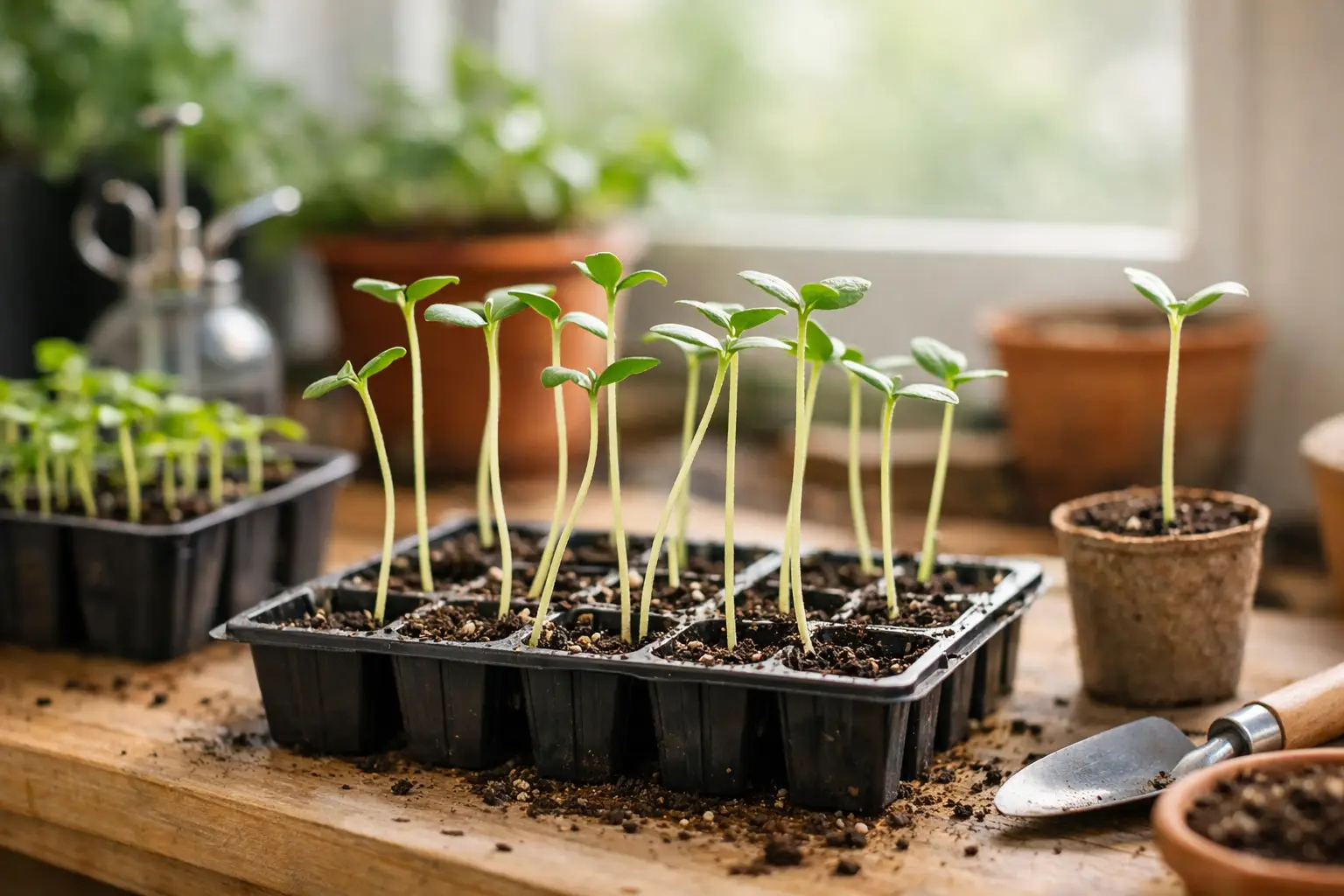
A leggy seedling has a long, weak stem and often leans toward the nearest window or light source. The spacing between the seed leaves and the first true leaves looks stretched out, and the stem may be too thin to support the top of the plant well.
This happens because seedlings are trying to survive. In low light, they put their energy into growing upward fast, hoping to reach stronger sun. That quick stretch comes at the cost of sturdy stem development. Instead of building compact, healthy growth, they become pale, floppy, and fragile.
The most common cause is not enough light, but it is not the only one. Too much warmth, crowding, and keeping seedlings indoors too long can all make the problem worse. Sometimes gardeners also feed seedlings too early or too heavily, which can encourage soft, weak growth instead of balanced development.
How to fix leggy seedlings before they fall over
The first step is to improve the light right away. A bright windowsill often sounds like enough, but for many vegetable seedlings, especially tomatoes, peppers, and brassicas, it rarely is. They need strong overhead light for long enough each day to grow compactly.
If you are using a grow light, lower it so it sits just a couple of inches above the tops of the seedlings without touching them. If the light is too high, seedlings still stretch. Keep the lights on for about 14 to 16 hours a day, then give the plants a dark period so they can rest. If you are relying on a window, move the seedlings to the brightest south-facing spot you have and rotate the tray daily, but know that natural window light alone may still not fully solve the problem.
The next fix is air movement. This small step makes a bigger difference than many gardeners expect. A gentle breeze from a small fan helps seedlings strengthen their stems by encouraging them to flex slightly. You do not want a hard blast of air, just enough movement to mimic outdoor conditions. Even brushing your hand lightly across the tops once or twice a day can help if you are only growing a few trays.
It also helps to adjust temperature. Seedlings often get leggy when they are kept too warm after germination. Warmth is useful for sprouting seeds, but once they are up, many varieties do better with slightly cooler conditions and strong light. If your setup is very warm, especially at night, lowering the temperature a bit can slow that stretched growth and give the plant a chance to thicken up.
Can leggy seedlings be saved?
Often, yes, but it depends on the crop and how far gone they are.
Tomatoes are the easiest to rescue. Their stems can produce roots, so you can pot them up deeper and bury part of the long stem. This gives you a stronger transplant and often turns an awkward seedling into a perfectly good plant. If your tomato seedlings are lanky but otherwise healthy and green, deeper planting is usually the fix.
Peppers and eggplants are less forgiving. You can plant them a little deeper when potting up, but not nearly as deeply as tomatoes. They still need better light and stronger growing conditions to recover well.
Cucumbers, squash, melons, and other fast-growing cucurbits are trickier. They dislike root disturbance and usually grow so quickly that legginess is harder to correct. If they are only mildly stretched, improve the light and handle them carefully. If they are badly bent or weak, starting over is sometimes the better choice.
Lettuce, cabbage, broccoli, kale, and similar seedlings can often recover if you catch the problem early. Give them better light, thin crowded cells, and keep them from overheating. They may not become perfect, but many will still transplant successfully.
Potting up leggy seedlings the right way
If your seedlings already have their first true leaves, moving them into slightly larger containers can help. Fresh potting mix gives the roots more room and lets you stabilize wobbly stems.
For tomatoes, fill the new pot partway with moist seed-starting mix or light potting mix, then set the seedling deep enough that much of the stretched stem is buried. Leave the leaves above the soil line, of course, but do not be afraid to plant tomatoes significantly deeper. Water gently after transplanting, then return them to strong light.
For other seedlings, only plant as deep as the crop can safely handle. Burying the stem too much on the wrong plant can lead to rot. If you are unsure, err on the shallow side and support the seedling with improved light and airflow instead.
One thing that helps here is not overwatering after potting up. Soggy soil keeps stems soft and can cause additional stress. Seedlings want evenly moist soil, not wet soil. Let the surface dry slightly between waterings while keeping the root zone from drying out completely.
When starting over is the smarter move
Gardeners do not always love hearing this, but sometimes the fastest path is a fresh sowing.
If seedlings are extremely thin, pale, pinched at the base, or constantly collapsing, they may never turn into strong plants. The same is true if they are badly crowded, tangled together, or leaning so hard that transplanting them would do more harm than good. Starting over is not failure. It is often what experienced gardeners do when the timing still works.
This is especially true for quick crops. Lettuce, basil, cucumbers, squash, and many flowers can catch up surprisingly fast when started again under better conditions. A short, sturdy seedling usually outperforms a tall, stressed one every time.
How to prevent leggy seedlings next time
The best prevention is giving seedlings enough light from day one. Not day three, not after they start leaning, but as soon as they emerge. Good seed-starting lights are often the difference between stocky plants and a tray full of weak stems.
Spacing matters too. When seeds are sown too thickly, seedlings compete for light almost immediately. Thin them early, even though it feels a little ruthless. Crowded seedlings shade each other and stretch fast.
Try not to baby them with too much heat once they have sprouted. Most seedlings do not need to sit on a heat mat after germination. Moving them off that extra warmth can help slow excessive stretching.
Be cautious with fertilizer. Seedlings do need nutrients once they begin growing true leaves, but a mild organic liquid fertilizer at half strength is usually plenty. Overfeeding can push soft, sappy growth that is more likely to flop.
A little movement also goes a long way. Airflow, brushing the tops, and eventually hardening plants off outdoors all help young stems become sturdier. Nature rarely grows seedlings in still, dim air, and indoor setups do best when they imitate outdoor conditions as much as possible.
A few common mistakes that make legginess worse
One is raising the grow light too soon because you worry about burning the plants. Most seedlings can handle lights being close, as long as the fixture is not producing excessive heat. Another is keeping a humidity dome on too long. Domes are great for germination, but once seeds sprout, that trapped warmth and moisture can encourage weak growth.
Another mistake is waiting too long to pot up. When roots run out of room and the top growth is already stretched, seedlings decline quickly. And of course, there is the classic windowsill trap. It looks bright to us, but for many edible seedlings, it simply is not enough.
If you have been there, you are in good company. Nearly every gardener who starts seeds indoors has produced a tray of lanky tomatoes or floppy basil at least once. It is one of those lessons that sticks because the fix is simple once you see the pattern.
Strong seedlings are not about perfection. They are about giving young plants what they need at the right time – bright light, a little airflow, reasonable warmth, and room to grow. Make those adjustments early, and even a tray that looks a bit awkward today can still become a healthy, productive garden in a few weeks.