That sinking feeling is hard to miss – one day your plant looks fine, and the next it is limp, droopy, and clearly unhappy. If you are wondering how to revive wilted plants, the good news is that wilting is often a distress signal, not a death sentence. In many cases, quick action and a little careful observation can bring a plant back.
The biggest mistake gardeners make is treating every wilted plant the same way. A wilted tomato in a raised bed, a basil plant in a patio pot, and a hydrangea slumping in afternoon heat can all look similar, but the fix is not always more water. Sometimes that helps right away. Sometimes it makes the problem worse.
How to revive wilted plants starts with the cause
Wilting happens when a plant loses more water than it can move through its stems and leaves. That sounds simple, but the reason behind it can vary quite a bit. Underwatering is the obvious one, especially in containers and during hot, windy weather. But overwatering, root damage, transplant shock, intense sun, compacted soil, and even disease can all lead to the same droopy look.
Before you reach for the hose, check the soil first. Push your finger down a couple of inches in a bed, or an inch or two in a container depending on pot size. If the soil is dry and dusty, the plant is likely thirsty. If it feels soggy, cool, and heavy, water is probably not the issue. In that case, the roots may be struggling because they are sitting in too much moisture and not getting enough oxygen.
This is where slowing down helps. A wilted plant looks urgent, and sometimes it is, but guessing usually costs more time than taking one minute to inspect the soil, the leaves, and the weather conditions.
First steps to revive a wilted plant
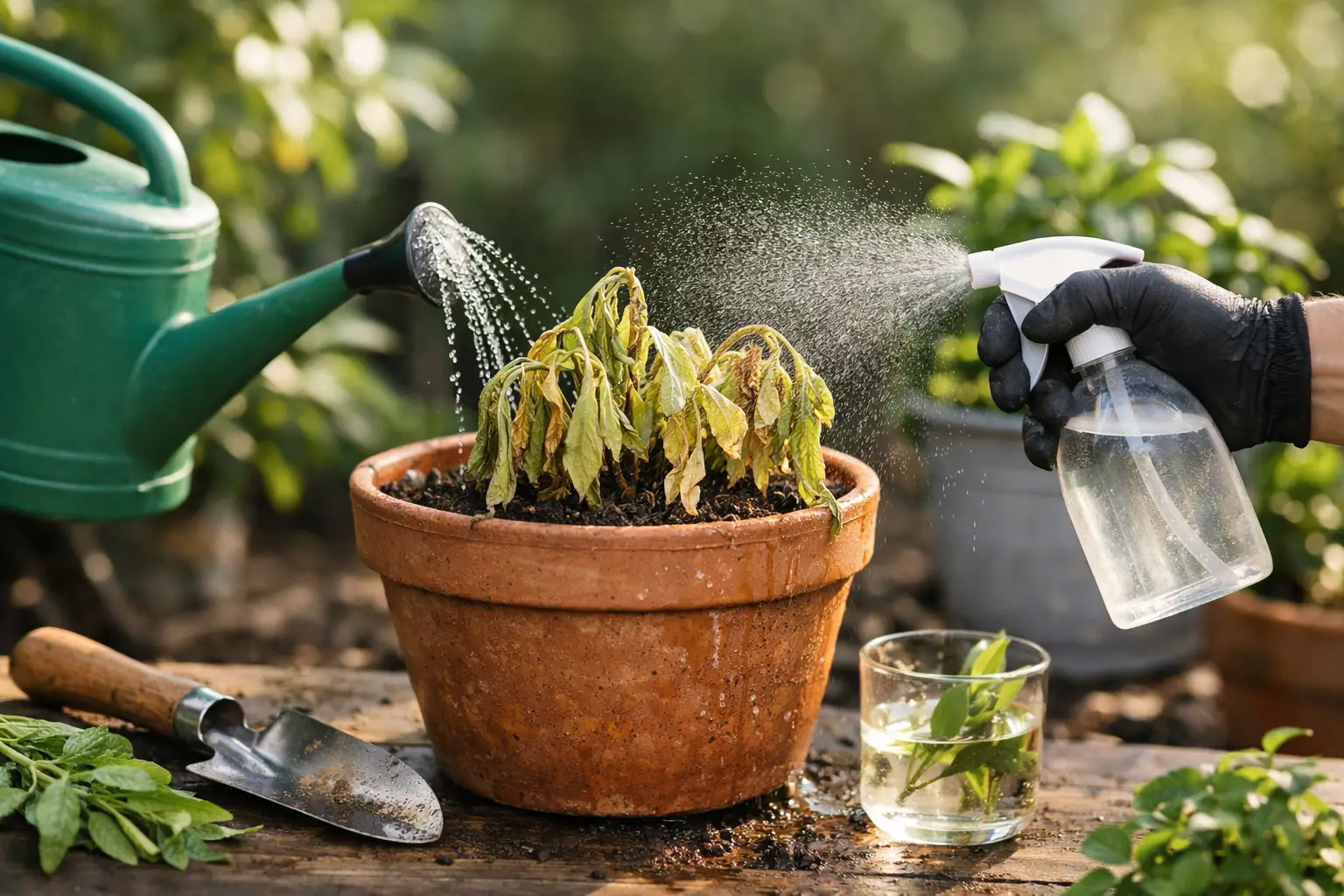
If the soil is dry, water deeply rather than giving the plant a quick sprinkle. Light watering often wets only the surface, while the roots deeper down stay dry. In beds, soak the root zone slowly so the water has time to sink in. In containers, water until it runs from the drainage holes, then let the excess drain away.
If the plant is in a pot and the soil has become so dry that water runs straight down the sides, the root ball may have turned hydrophobic. That is a fancy way of saying it is so dry it resists water. Set the pot in a shallow container or bucket of water for 15 to 30 minutes so the soil can absorb moisture from the bottom up. After that, let it drain well.
Then move the plant out of harsh afternoon sun if you can. This matters most for container plants, seedlings, and recent transplants. Temporary shade gives the roots time to catch up with the leaves. A patio umbrella, shade cloth, or even placing the pot where it gets morning sun and afternoon protection can make a big difference while it recovers.
Do not fertilize right away. When a plant is stressed, fertilizer can add pressure, especially if the roots are dry or damaged. Get the watering and light conditions under control first. Once you see signs of recovery and new growth, then you can think about feeding lightly with a gentle organic option if needed.
When more water is the wrong fix
One of the trickier parts of learning how to revive wilted plants is recognizing overwatering. The leaves droop, so it feels natural to add more water, but roots sitting in soggy soil cannot breathe. Over time they weaken, and the plant wilts even though the soil is wet.
If the soil feels consistently soaked, pull back on watering and improve drainage. For potted plants, make sure the container has drainage holes and is not sitting in a saucer full of water. For garden beds, loosen compacted soil around the plant if you can do it without damaging roots, and top-dress with compost later to improve soil structure over time.
Leaves can offer clues too. A thirsty plant often has dry, crisp edges or thin, limp leaves. An overwatered plant may look swollen, yellowing, or soft. These signs overlap, so they are not perfect, but together with the soil check they can point you in the right direction.
Heat stress can look dramatic
Some plants wilt in high heat even when the soil is adequately moist. You will see this often with squash, cucumbers, and hydrangeas on hot afternoons. They may look terrible at 3 p.m. and perfectly normal again by evening.
If the plant perks up when temperatures cool down, that is usually temporary heat wilt rather than a serious water problem. In that case, resist the urge to keep watering every time you see drooping leaves. Too much water can creep in fast during summer.
What helps instead is moisture management. Add a natural mulch such as shredded leaves, straw, or untreated bark around the base of the plant to keep the soil cooler and reduce evaporation. Water early in the morning so roots have access to moisture before the hottest part of the day. That routine is usually more effective than trying to rescue heat-stressed plants in the middle of the afternoon.
How to revive wilted plants after transplanting
Freshly transplanted vegetables, herbs, and flowers often wilt because their roots have been disturbed. Even when you are careful, transplanting is a shock. The plant needs time to reconnect with the surrounding soil and start taking up water efficiently again.
If this is the situation, keep the soil evenly moist but not saturated for the first week or two. Give the plant temporary shade during the hottest part of the day, especially for lettuce, peppers, basil, and young tomato starts. A little compost around the planting area can help with moisture retention, but avoid piling anything directly against the stem.
It also helps to trim off any badly damaged leaves. Do not strip the plant bare, but removing a few leaves reduces water demand while the roots recover. Most transplants bounce back if they get steady moisture, moderate sun exposure at first, and a little patience.
Root problems need a different approach
If a plant stays wilted even after proper watering, the roots may be the real problem. This can happen from root rot, grubs, severe transplant damage, circling roots in old containers, or stem injury near the soil line.
For container plants, gently slide the root ball out and inspect it if the plant is small enough to handle. Healthy roots are usually light colored and firm. Rotten roots are dark, mushy, or have a sour smell. If root rot has started, trim off the damaged roots, repot into fresh well-draining mix, and water sparingly until the plant stabilizes.
In garden beds, root inspection is harder, so look for patterns. If only one plant is wilted while nearby plants are fine and the soil moisture is normal, root or stem damage becomes more likely. Sometimes the best move is supportive care rather than aggressive intervention: keep moisture even, reduce heat stress, and watch for new growth.
Natural ways to help plants recover
Once the immediate cause is handled, recovery is about reducing stress. A layer of mulch helps conserve moisture and protect shallow roots. Compost improves soil gradually without the harsh push of synthetic fertilizers. Seaweed-based organic products are sometimes used as a gentle transplant tonic, though results vary and they are not magic. Good watering habits still matter more.
Pruning can help in some cases, especially if a larger plant has more top growth than its stressed roots can support. But this depends on the plant. A wilted basil may respond well to a light trim. A struggling cucumber vine may not appreciate extra cutting. When in doubt, remove only what is clearly dead or badly damaged and let the plant tell you what it can handle.
When a wilted plant may not recover
Sometimes a plant wilts because it is dealing with bacterial wilt, fungal disease, or severe root failure. If the soil is moist, the weather is reasonable, and the plant keeps collapsing without improvement, recovery may be unlikely. Tomatoes and cucumbers, for example, can wilt from disease even when you have watered correctly.
That is frustrating, but it is not always a sign you did something wrong. Gardens are living systems, and not every problem is fixable. If a plant does not recover, remove it promptly if disease is suspected, and avoid composting infected material unless you are certain your compost system gets hot enough.
A wilted plant is your garden asking for a closer look, not a panic response. The best rescue plan is usually simple: check the soil, slow down, adjust water, ease the heat, and give the roots a chance to recover. Quite a few plants that look completely spent in the morning can surprise you a day or two later when the conditions are right.